Directions
Do I need to book in advance?
You can buy tickets on the door, but we recommend booking online to guarantee your tickets!
Kids under 12 FREE?
One free child ticket with every paying adult ticket, any additional children are charged at £5.00
Entrance Pricing:
Day Pass – £14
Parking – £4
Opening Times?
Tues – Fri: 9:30am-4pm
Sat: 9am-4pm
Do we need to book for the Cafe?
No need to book! Please note we kindly request no picnics on site, as we rely on our café sales to help maintain our wonderful sculpture park.
Do you allow dogs?
Yes, in all outdoor spaces and outdoor café area!

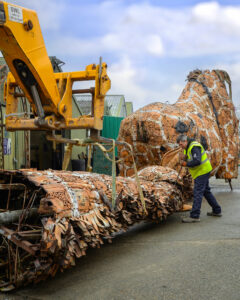
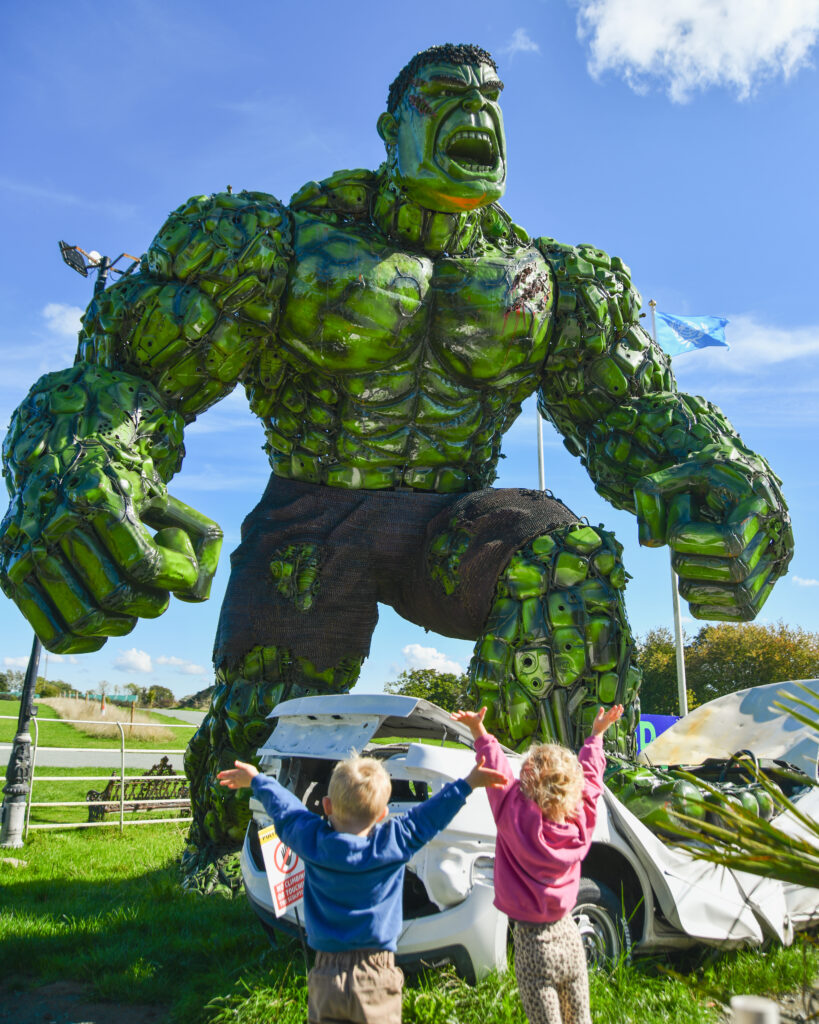
Our latest sculpture rises 13 metres into the sky – eclipsing the height of the tallest land animal, the giraffe. But instead of bone and muscle, its form is built from the discarded remains of human industry: exhausts, gears, body panels, springs, and steel once engineered to carry us forward.
The giraffe has long symbolised perspective. From its vantage point it can see further than any other land animal. This sculpture invites us to do the same, to step back and consider the scale of humanity’s impact on the natural world.
Over the past century, human activity has transformed the planet at a pace rarely seen in Earth’s history. The automotive parts that shape this sculpture represent one of the most powerful drivers of that change. Cars reshaped landscapes, cities, and ecosystems, enabling human expansion while leaving behind vast amounts of waste, emissions, and environmental damage.
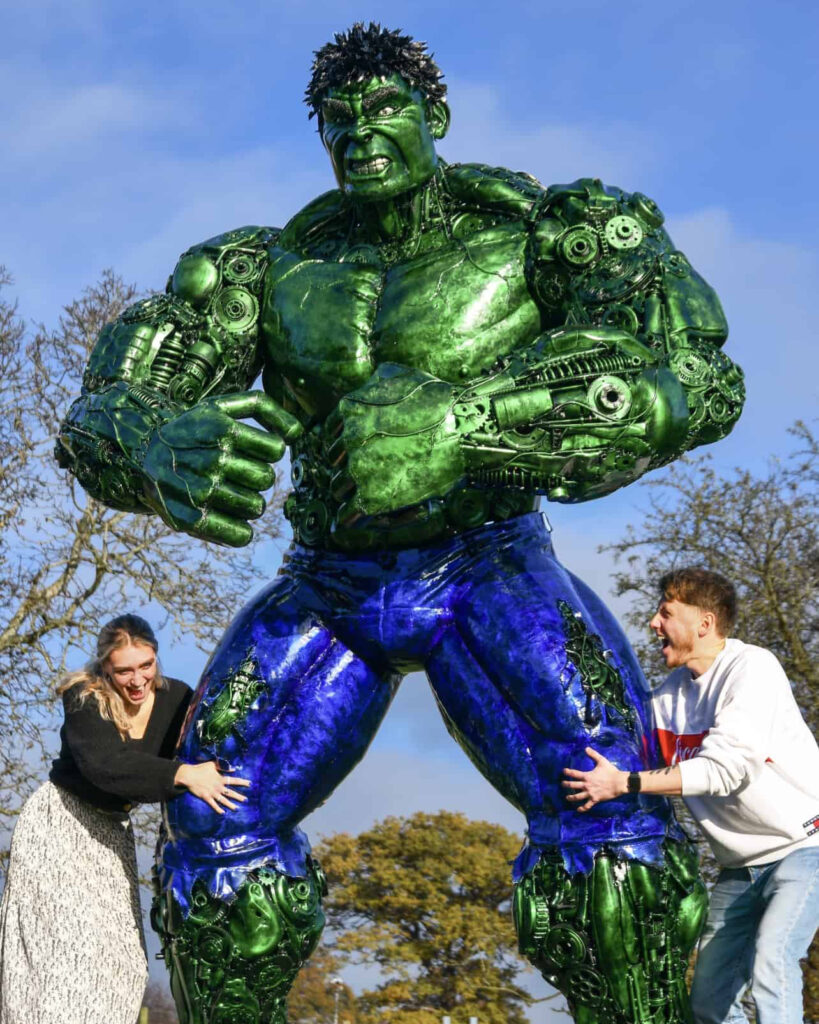
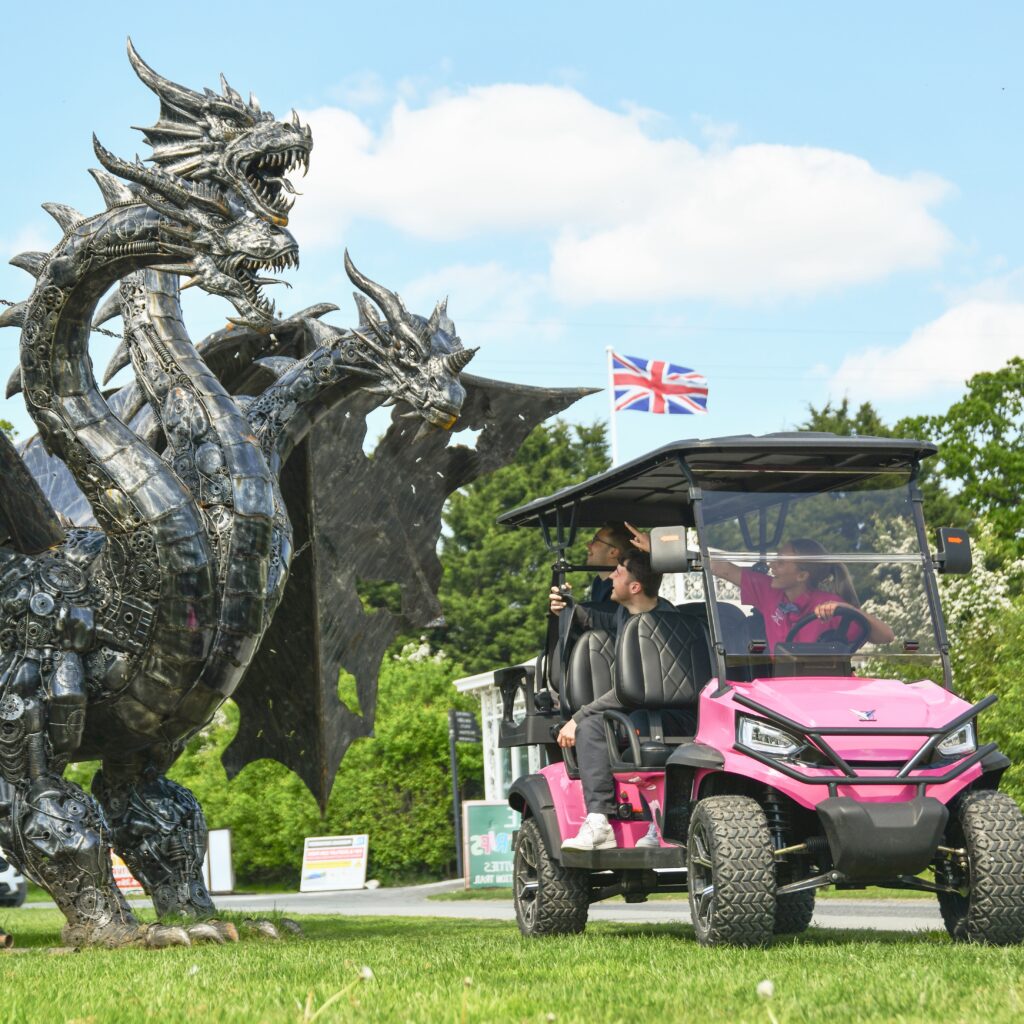
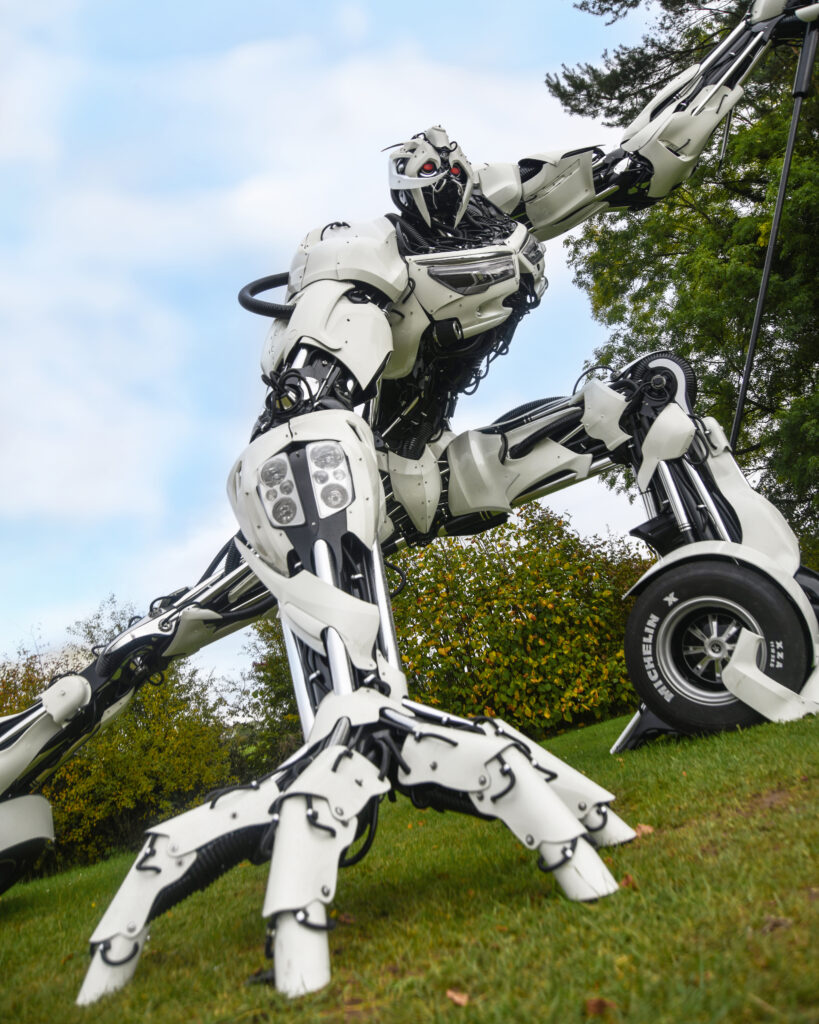
Constructed entirely from recycled automotive components, the sculpture embodies a powerful paradox. The same materials that helped accelerate environmental decline are reassembled here to create a monument that challenges us to reconsider our direction. The act of recycling becomes both a symbol of possibility and a reminder of responsibility.
At 13 metres tall, the structure is intentionally overwhelming. It stands as a reflection of the scale of human influence – a point where the consequences can no longer be ignored.
The question it asks is simple:
How high must the consequences rise before we decide to stop climbing?