Directions
Do I need to book in advance?
You can buy tickets on the door, but we recommend booking online to guarantee your tickets!
Kids under 12 FREE?
One free child ticket with every paying adult ticket, any additional children are charged at £5.00
Entrance Pricing:
Day Pass – £14
Parking – £4
Opening Times?
Tues – Fri: 9:30am-4pm
Sat: 9am-4pm
Do we need to book for the Cafe?
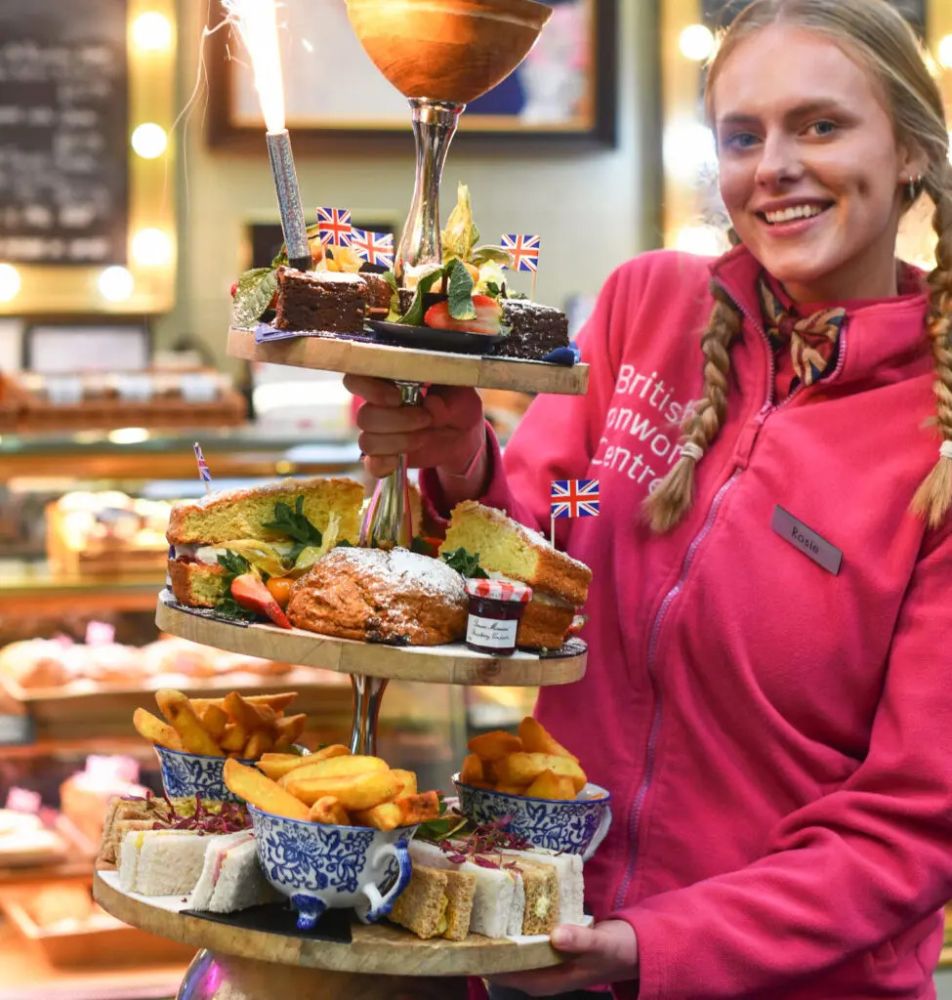
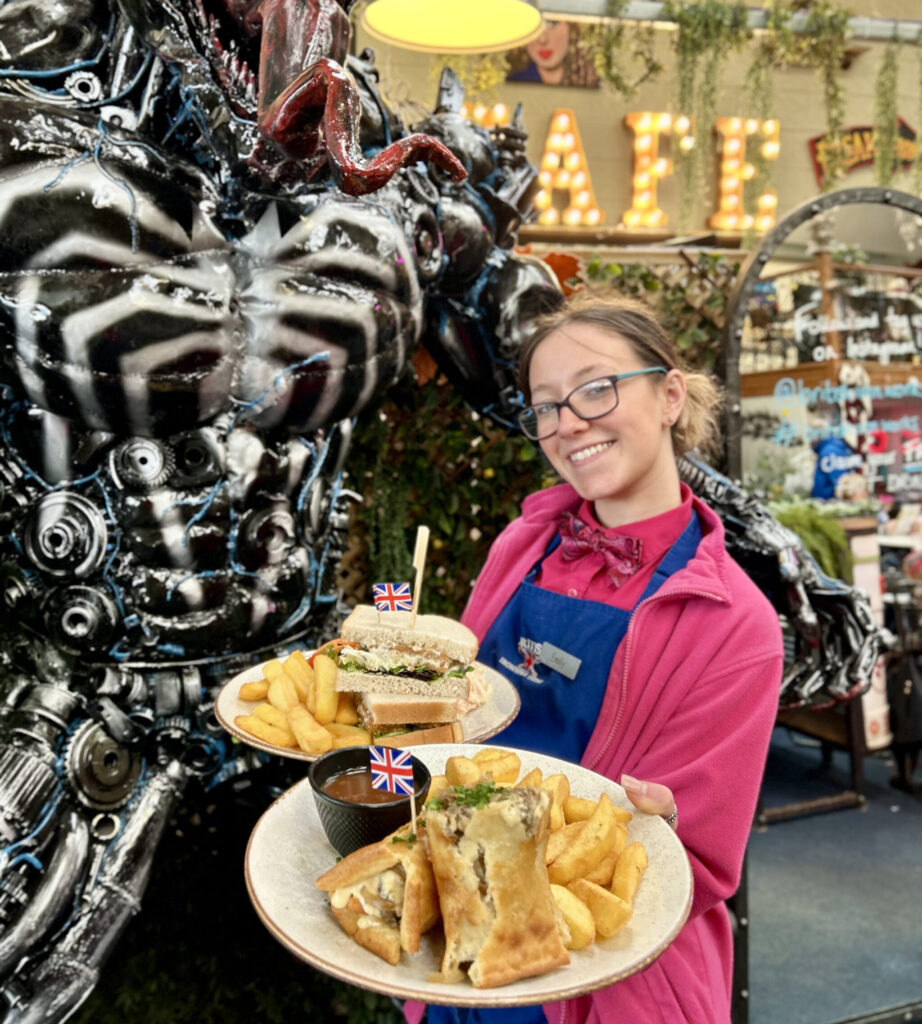
No need to book! Please note we kindly request no picnics on site, as we rely on our café sales to help maintain our wonderful sculpture park.
Do you allow dogs?
Yes, in all outdoor spaces and outdoor café area!

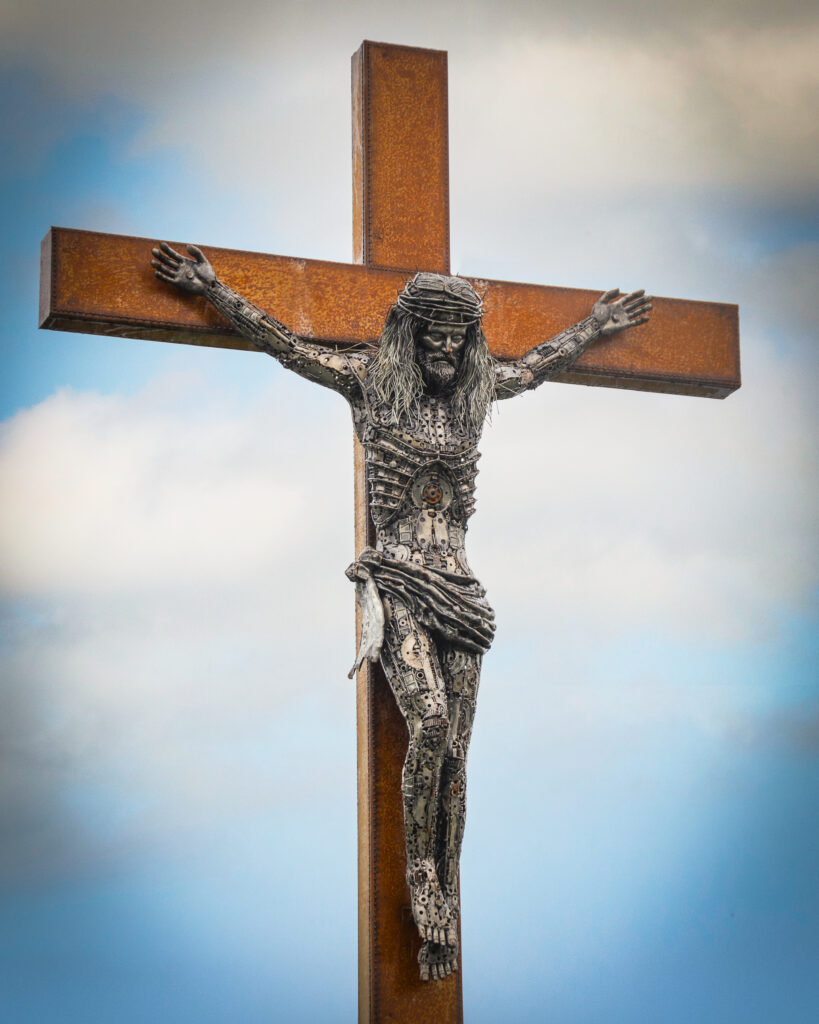
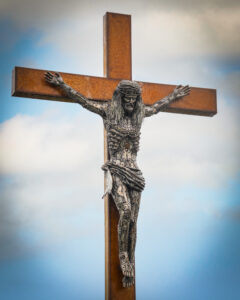
Christianity has historically been central to British culture, identity, and institutions, yet year after year we are seeing a fast climbing increase in those who do not engage in Christianity. This inspired us to create a sculpture of Jesus Christ, made out of scrap metal, to open the conversation around the decline of Christianity, and the difficulties it is facing.
In the 1950s, around 50% of the UK population attended church regularly, but by the 2010s, this had dropped to around 10% or less. Many churches in the UK have aging congregations, with fewer younger people attending services. Religious practices that were once commonplace, such as attending church every Sunday, are now seen as outdated by many younger people. This leads to a domino effect, with the next generation of children being raised in non-religious households, making them less likely to adopt Christianity in adulthood.
So why are the younger generation not engaging in Christianity? In the past few decades, society’s attitude towards marriage, sexuality, and gender have quickly evolved, and the Church’s traditional teachings on these topics has led many people to distance themselves. The scandals within the church have also contributed to this, leading to a loss of trust among some people.
As people in the UK have moved away from Christian beliefs, many have turned to alternative forms of spirituality. The rise of humanism and atheism has also contributed to the decline of Christianity, as humanism offers a moral framework without the need for religious belief, appealing to those who may still seek purpose and meaning in life but do not believe in God.
Religious diversity in the UK has been growing significantly as immigration from non-Christian countries increases. Our desire to be inclusive of different religious and non-religious groups has led towards greater sensitivity to religious diversity. To maintain social harmony in such a multi-cultured society, there has been a noticeable effort amongst communities to respect all religions. This respect for diversity has contributed to a less visible public presence of Christianity, to avoid favouring one religion over others, which is important when the UK is home to many different beliefs and worldviews.
Statistics from 2018 show that around 50% of people in the UK identified as non-religious, which has increased from around 30% a few decades earlier. However in developing countries, Christianity is experiencing substantial growth. This, in part, is thanks to the work of missionaries, who focus on education, healthcare, and community development. Increased connectivity through technology and media has also allowed Christianity to expand more easily. Christianity offers a sense of hope and community in ways that resonate with local populations.
The decline of Christianity in the UK has created a debate regarding moral values and ethical behaviour. If we look at the decreasing amount of practicing Christians, then look at the increased statistics of violent crime in the UK, it’s easy to put the two together and declare that there’s a correlation, however it’s just not that simple. While many of the values we possess such as compassion, charity and justice have roots in Christian teachings, numerous studies have shown that non-religious people exhibit just as strong moral behaviour, if not more than some religious people. Christianity offers a moral compass for those who follow it, but non-religious people find their own moral paths through empathy, reason, and shared human values.
Regardless of religion engagement, we believe in the importance of building a more inclusive and compassionate world, one that we can be proud to pass onto our future generations.