Directions
Do I need to book in advance?
You can buy tickets on the door, but we recommend booking online to guarantee your tickets!
Kids under 12 FREE?
One free child ticket with every paying adult ticket, any additional children are charged at £5.00
Entrance Pricing:
Day Pass – £14
Parking – £4
Opening Times?
Tues – Fri: 9:30am-4pm
Sat: 9am-4pm
Do we need to book for the Cafe?
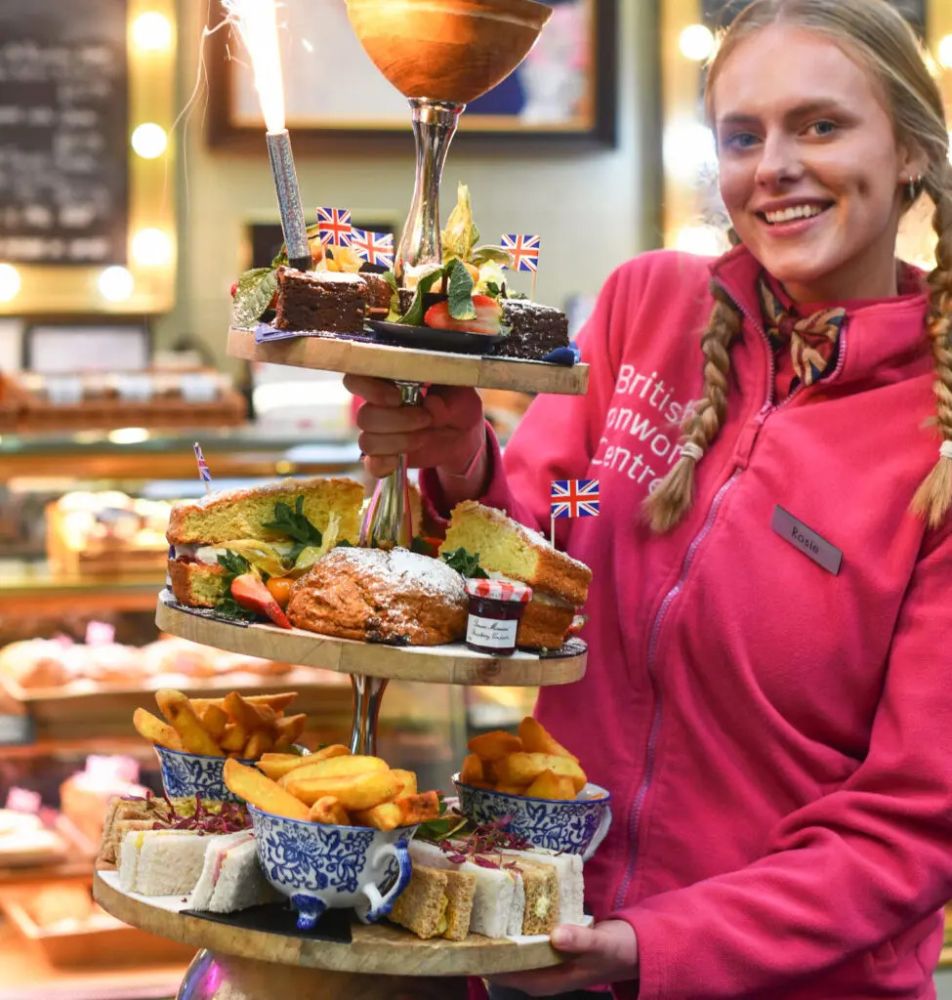
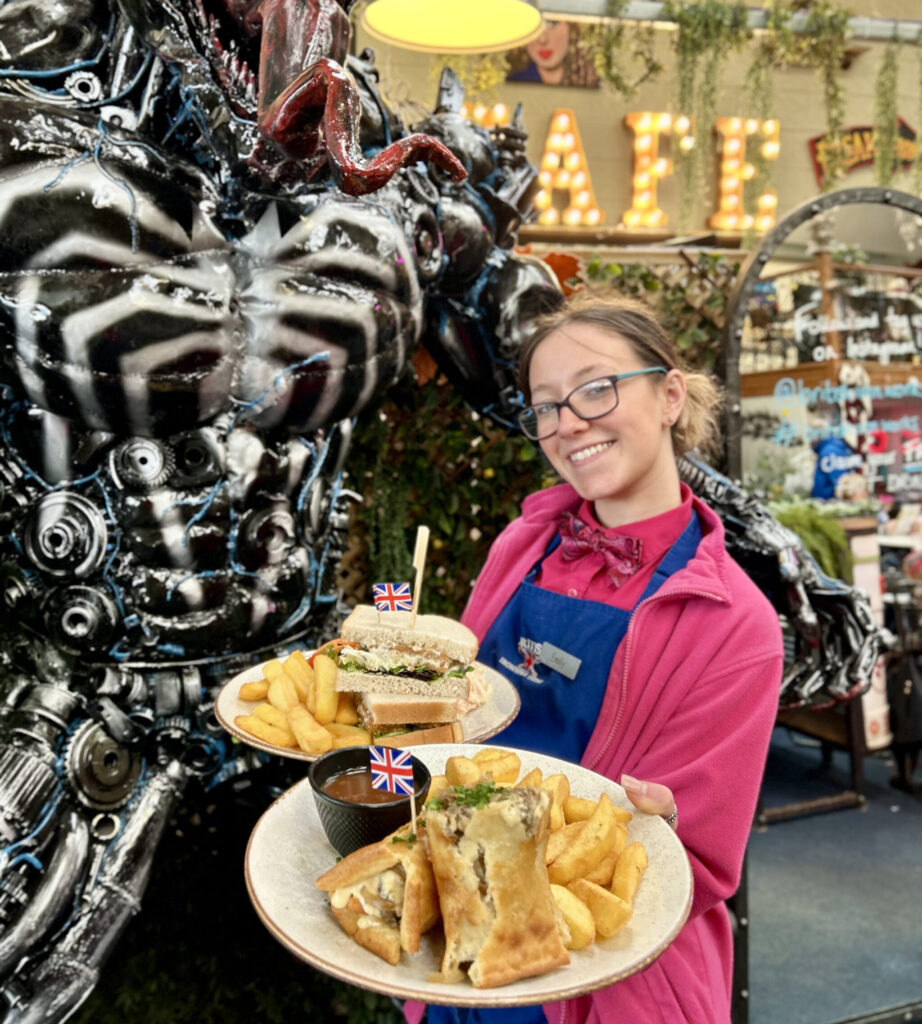
No need to book! Please note we kindly request no picnics on site, as we rely on our café sales to help maintain our wonderful sculpture park.
Do you allow dogs?
Yes, in all outdoor spaces and outdoor café area!

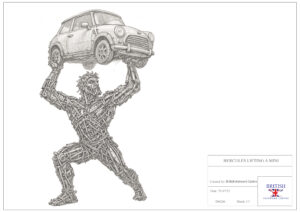
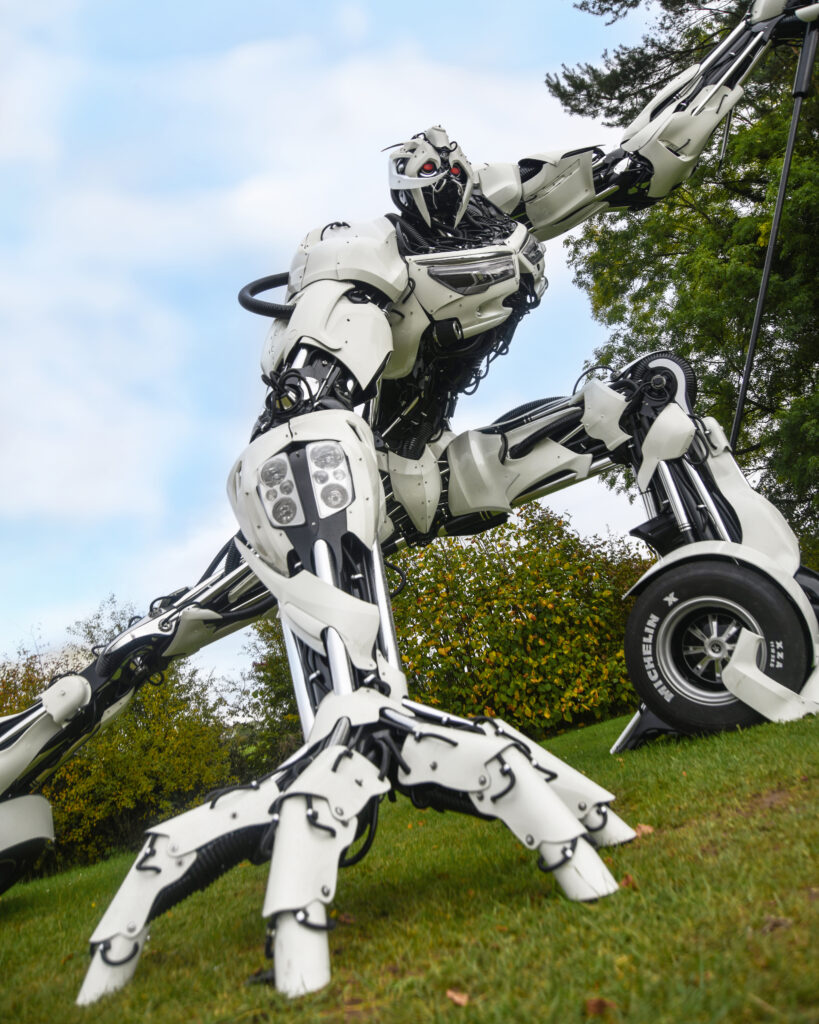
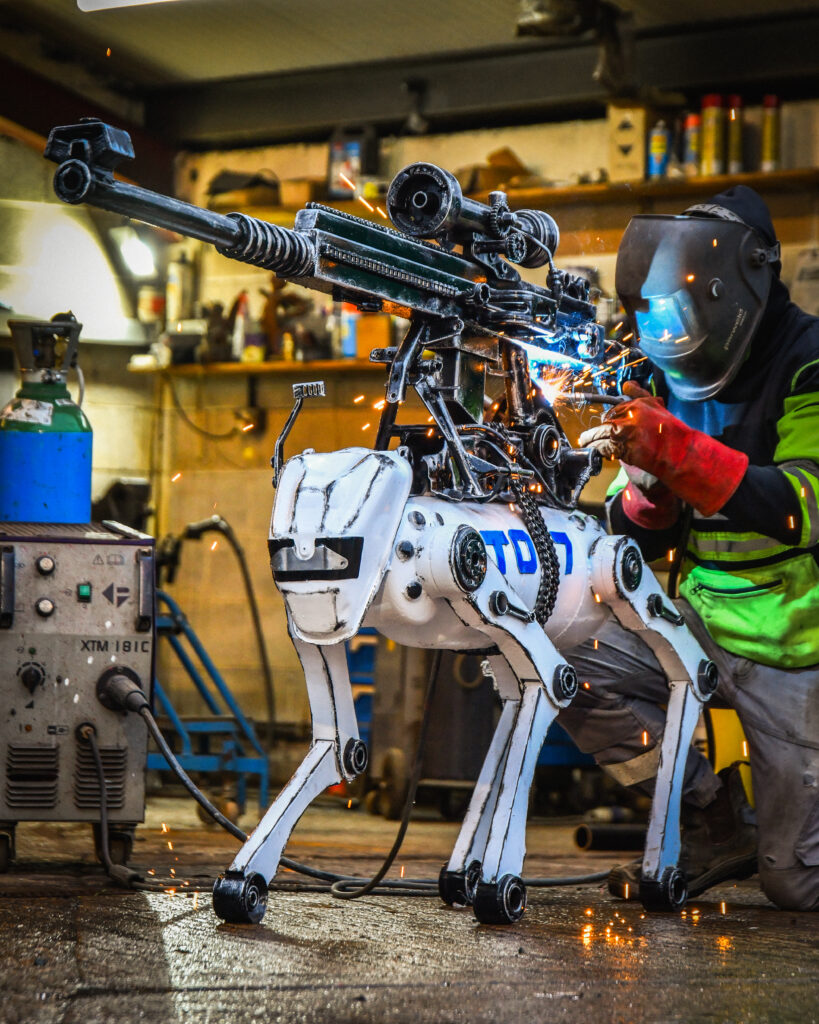
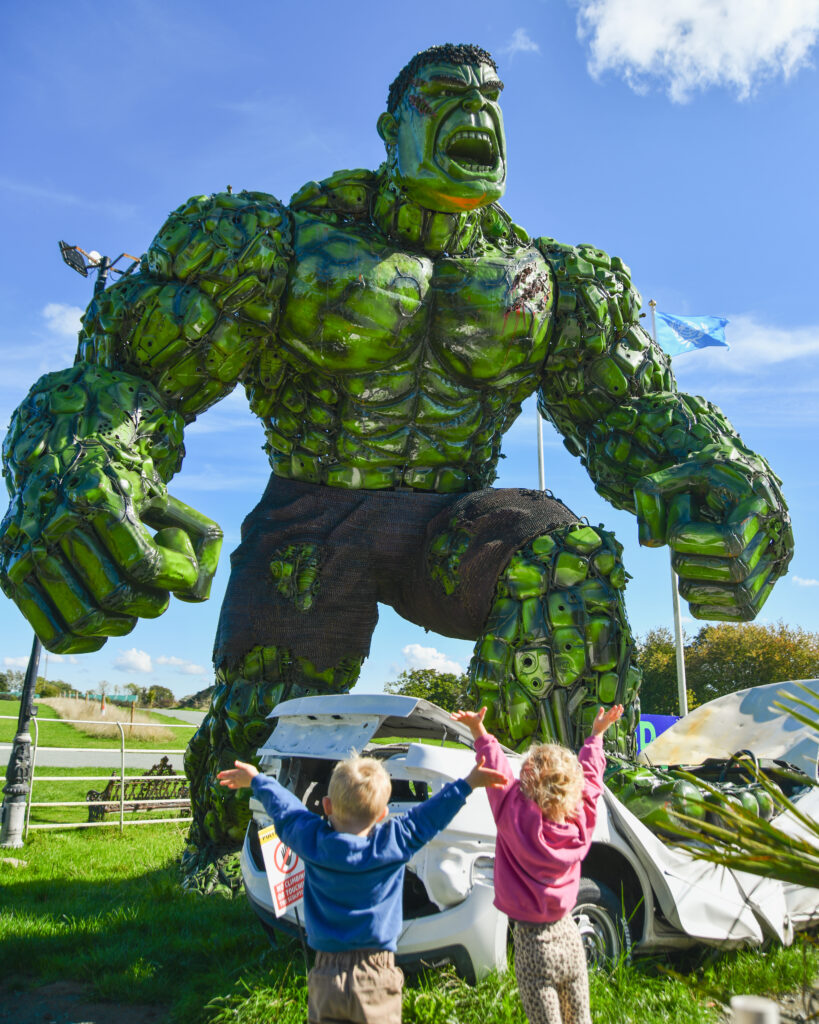
Our latest sculpture is designed to not only wow our guests by its sheer scale, but to reflect on the classic ‘Man vs Machine’ debate.
While the pendulum constantly seems to swing in favour of one, then the other, we still find ourselves asking – what does the future hold for humans in a technologically advanced world?
Our sculpture will depict the half-human, half-Greek God, Hercules, renowned for his extraordinary strength, crafted entirely from scrap metal. Above his head, our protagonist will hold a real Mini Cooper, to represent the strengths and weaknesses of both humans and machines.
What do humans do better than machines?
Humans possess genuine creativity and truly original solutions. We can think outside the box and conceive of things that have never existed, while machines, particularly AI, draws from existing datasets and relies on human instructions.
We know that machines excel at logical, rule-based reasoning and data analysis. However, they struggle with abstract concepts and moral dilemmas. Humans can apply common sense to situations, make judgments based on incomplete information, and adapt to unpredictable circumstances. Machines have no intuition as we pull these from our own experiences.
One of the clearest distinctions is humans capacity for emotions, such as empathy and compassion. These are crucial for creating real connections with people, and any job requiring nuanced human interaction. While machines can simulate human emotions, they lack consciousness so do not feel them. Humans also possess a moral compass, allowing us to make ethical decisions, and to be held accountable in a way machines cannot.
What do machines do better than humans?
Machines can process vast amounts of data, perform calculations, and execute tasks at far faster speeds than humans. Humans are subject to fatigue, require breaks, and have physical limitations on their speed, meaning machines are far more efficient for a lot of industries.
Humans are prone to mistakes, especially in repetitive or high-stress environments, while machines perform repetitive tasks with perfect consistency and precision with practically zero errors.
Machines can work 24/7 without rest, complaints, or needing benefits. They can be replicated and deployed on a massive scale quickly. Humans, of course, require sleep, food, and fair working conditions, and recruiting people can be slow and expensive.
While ‘Man vs Machine’ is an ongoing debate, we feel that the future lies with ‘Man + Machine’, as both working together can achieve outcomes that neither can accomplish alone, by utilising complementary strengths.