Directions
Do I need to book in advance?
You can buy tickets on the door, but we recommend booking online to guarantee your tickets!
Kids under 12 FREE?
One free child ticket with every paying adult ticket, any additional children are charged at £5.00
Entrance Pricing:
Day Pass – £14
Parking – £4
Opening Times?
Tues – Fri: 9:30am-4pm
Sat: 9am-4pm
Do we need to book for the Cafe?
No need to book! Please note we kindly request no picnics on site, as we rely on our café sales to help maintain our wonderful sculpture park.
Do you allow dogs?
Yes, in all outdoor spaces and outdoor café area!

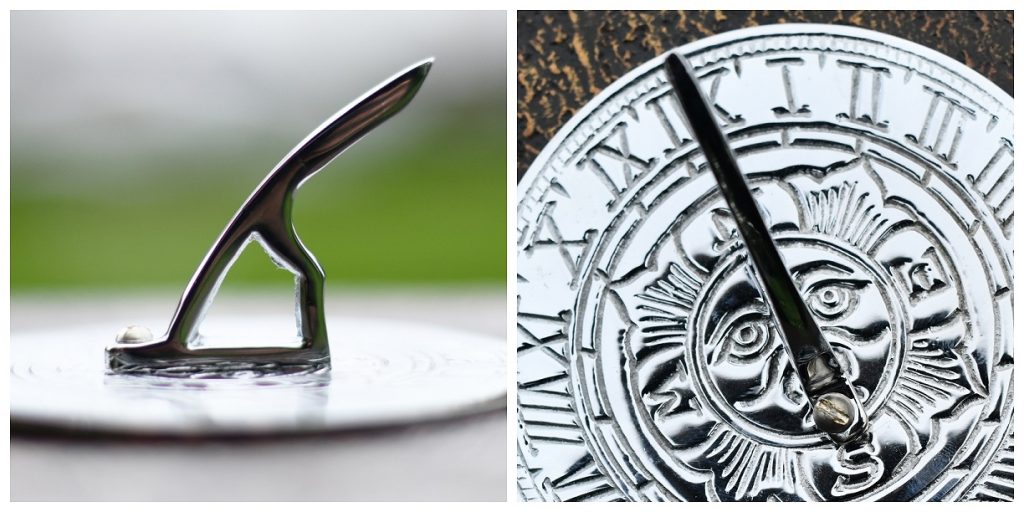
The sundial has a long and interesting history of measuring time through the position of the sun in the sky, and although we have now developed many other ways to tell the time, the traditional sundial is still a popular and charming feature in any garden or outdoor space.
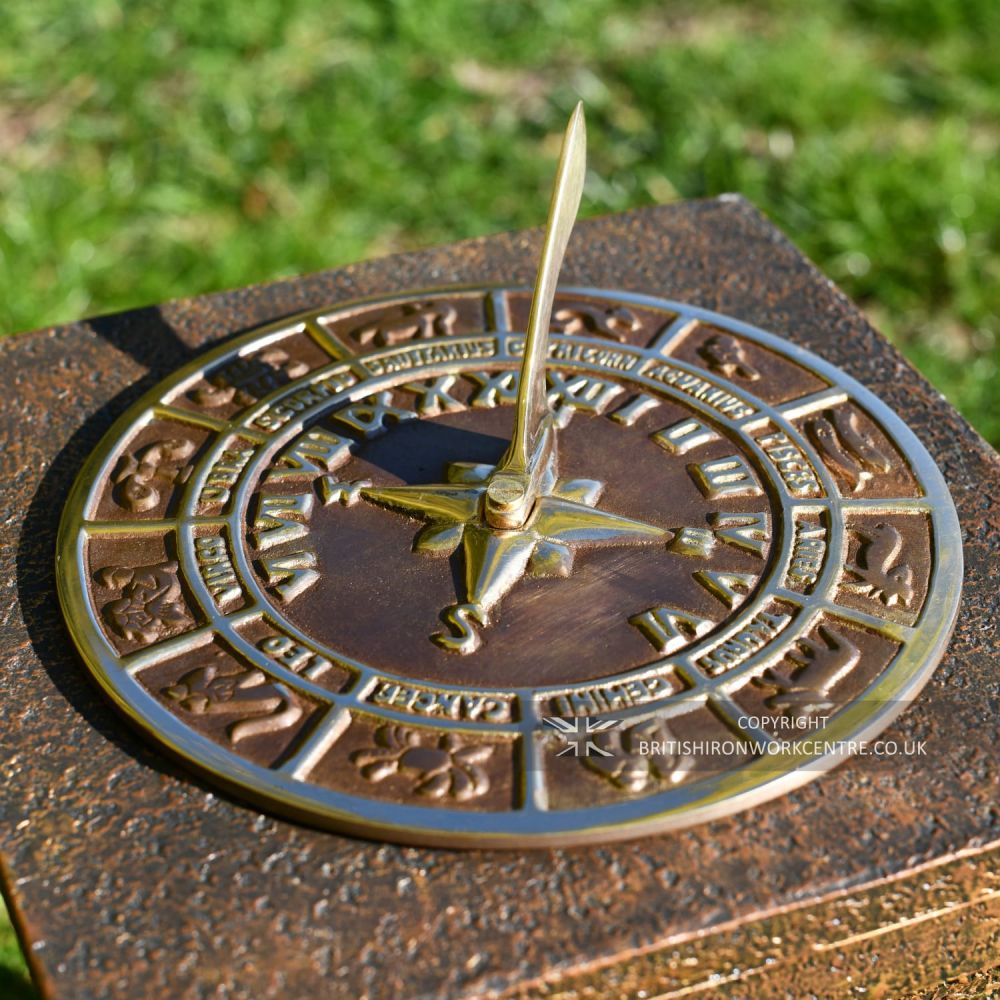
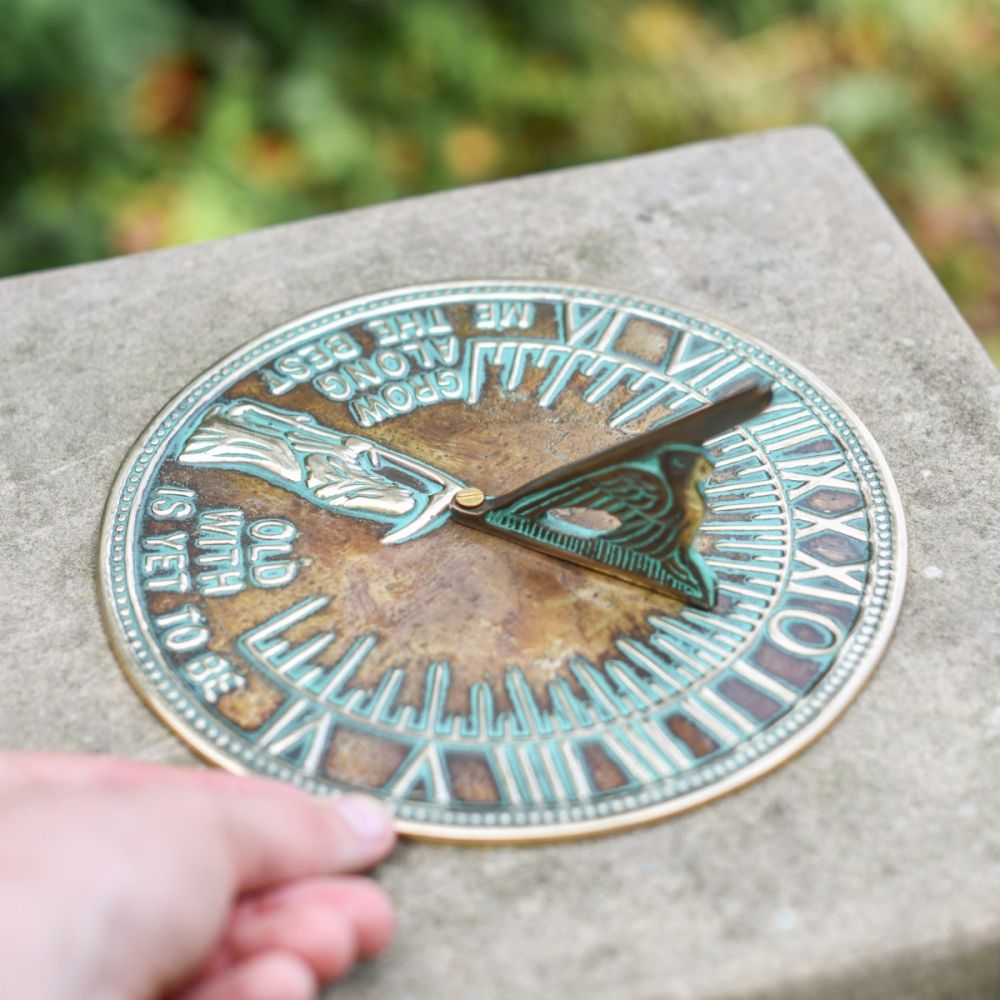
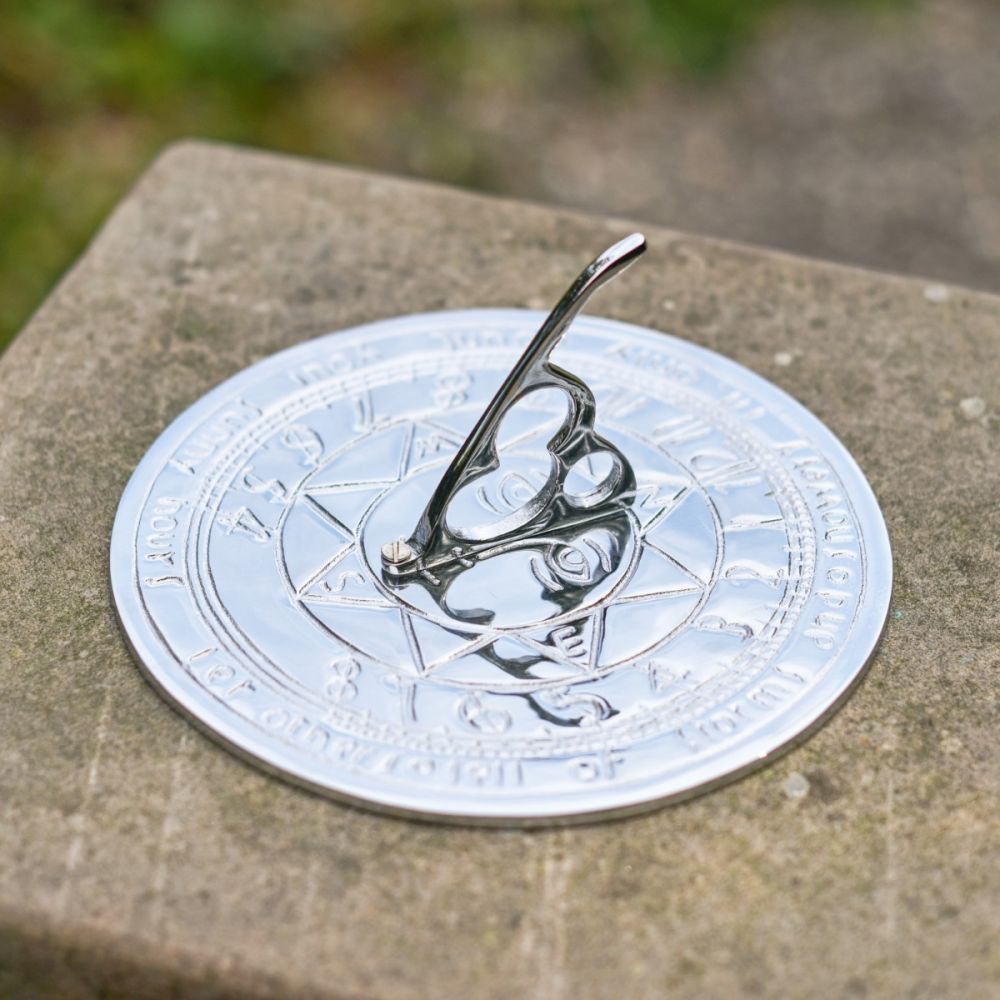
With a deep rooted and rich heritage, our stunning range of sundials take inspiration from the age old tradition of garden sun clocks. These enchanting and beautifully decorative time pieces beautifully lend character and charm to any outdoor space.
A delightful feature piece for your garden or grounds, our sundials have been handmade in solid brass and are available in an array of designs and finishes.
See our full collection of sundials here.
The first sundial dates back to around 1500BC and was used throughout the Egyptian period as a decorative way to tell the time of day. Despite this, it was the ancient Greeks some 3,000 years ago with their advanced technology in iron making and their knowledge of geometry and mathematics that advanced metal sundial designs.
Moreover, the custom of measuring time by shadows persisted from ancient times right through to the invention of the mechanical clock in more industrial times. As such, the sundial is now considered to be the first scientific time-telling instrument, making it possible for us to visualise our four-dimensional world.
The shadows that are cast by the sun move in a clockwise direction for objects within the Northern Hemisphere. After this discovery, people were able to make sundials that kept time more accurately and, hence, the angle of the gnomon or indicator was invented to coincide with the tilt of the earth.
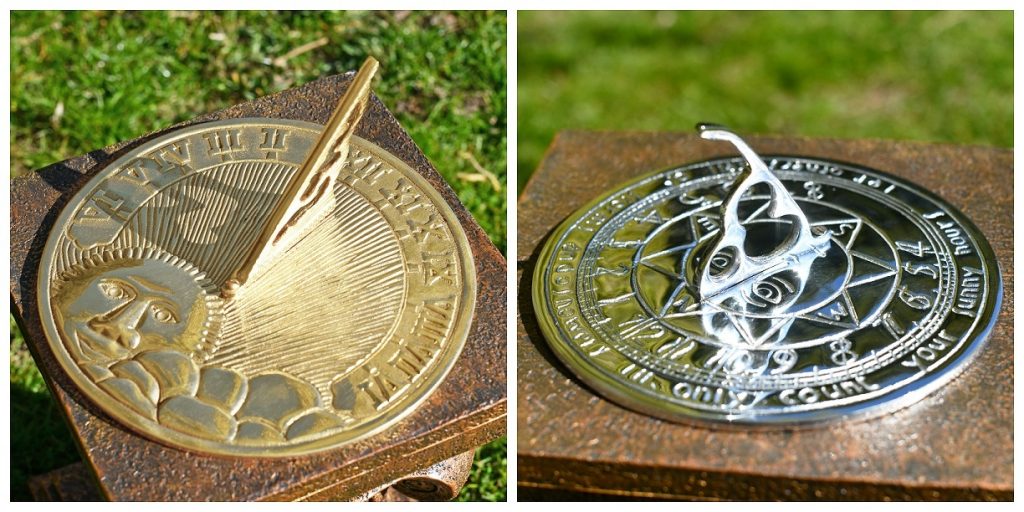
Our sundials are second to none when it comes to quality and affordability. We have a vast and varied array of designs for you to choose from with varying sizes to suit every garden style. All of our sundials are made from solid brass and are available in a number of finishes.
The key to deriving maximum pleasure from your new sundial is to begin by selecting a suitably flat surface in a location that is totally exposed to the sun, away from buildings and trees. The longer your sundial is in direct sunlight, the better it will give accurate readings.
2. Second, calibrate or “time set” your sundial by aligning the gnomon (the sloping shadow-casting object on the dial face) with true north. To find true north we recommend marking a shadow cast using a vertical object at the precise time of local noon. However, be sure to mark your shadow using a true vertical object. A pole aligned vertically, checked by a spirit level, is the surest method of casting a good north-indicating shadow.
3. Finally, once the sundial face and gnomon angle is aligned with your established true north line, be sure that the pedestal is fixed completely vertical, again using a spirit level. If the base is moved, the sundial will read inaccurately. Periodically check that the base is level and that the time is accurate, particularly in freezing weather. To test time accuracy, check that the gnomon casts no shadow at exactly 12 noon, for at the precise time of noon the sun is directly overhead and true vertical objects will not cast shadows at this time.