
-
In the United Kingdom we’re lucky enough to live alongside fifteen species of raptor and four species of owl. Thanks to the efforts of passionate volunteers and experts, the number of raptors in the UK is rising after dipping alarmingly in the 1970s, but some of our birds of prey are still at risk of becoming extinct from our shores. Eagles There are two species of eagle that call the UK home: the golden and the white-tailed. These awesome birds have the largest wing...
Read more... -
The elk is one of the largest species of the the deer family. They stand at around five feet tall (from hoof to shoulder) and weigh in at almost 500 kilograms. Their antlers alone can weigh 10 kilograms each, and they can measure in length and spread at four feet. Elk live in colder climates and thrive in prairies, aspen parklands, sagebrush flats, open deciduous woodland, boreal forests, upland moors, mountainous areas and grasslands. They have diverse diets, consuming a mi...
Read more... -
How similar are we really to chimpanzees? Humans did not evolve from chimpanzees but we do share common ancestors. Humans diverged from the chimpanzee lineage between 9.3 million and 6.5 million years ago, but we still share 98.8% of our DNA. What do we have in common with chimpanzees? We share many behaviours and traits with these beautiful animals. Humans and chimpanzees love to play, smile and cook with their favourite ingredients. Like humans, chimpanzees are aware o...
Read more... -
We are looking for an artist to create something beautiful from wood waste. We won’t be using any wood that can be deemed “useful”, we want scrap and waste! So, what is a pile of scrap wood to you? Rubbish? Or kindling? Here at the Ironworks, we’re always looking for new ways to create art from all sorts of materials. Wood is a fantastic substance to craft from. It is hardy and versatile and will eventually decompose, leaving no lasting trace on our planet. Wood also age...
Read more... -
The trunk of an elephant is a marvel of biology! Composed of 140 kilograms of flesh, fat, nerves, connective tissue and muscle, the trunk of an elephant is usually around 7 feet long, and can hold up to 12 litres of water at a time. Elephants use their trunks to eat and drink, smell and to communicate with one another. They also use them as snorkels and to bat away potential threats. Using their trunks, elephants can detect water up to 19km away! How strong is an elephant ...
Read more... -
The Welsh Dragon: there is no symbol quite like it. Adorning the country’s flag, this dragon is flown around the world to mark St. David’s Day and numerous sporting events. It is often said that compared to other nations, the Welsh have a positive relationship with their dragon; heroes throughout its history often praised for being “dragon-like”. The Origins of the Welsh Dragon The origins of Y Ddraig Goch are buried deep in history and mythology. Celtic king, Vortigern,...
Read more... -
Pegasus is a winged horse that originated deep within the tales and stories of Greek Mythology. Ancient Greek civilisation occurred between 1200 BCE and 323BCE, so the legend of Pegasus is thousands of years old. Often depicted as a white stallion, Pegasus was born when his mother, the Gorgon Medusa, was beheaded by Greek hero, Perseus. Pegasus was tamed by Bellerophon, and together they defeated the Chimera. HOW WAS PEGASUS CAUGHT? The tale begins when the Lycian king, I...
Read more... -
Greater Kudu are one of the largest species of antelope and can be found in various parts of the African continent. They can weigh up to 315kg and are characterised by their white stripes and towering, spiralling horns which can be up to 1.8m long! Despite their horns, these gentle creatures seldom fight. They are very rarely aggressive in the wild and they will only fight with opponents of the same size and age. They are generally considered stealthy and hard to spot; givi...
Read more... -
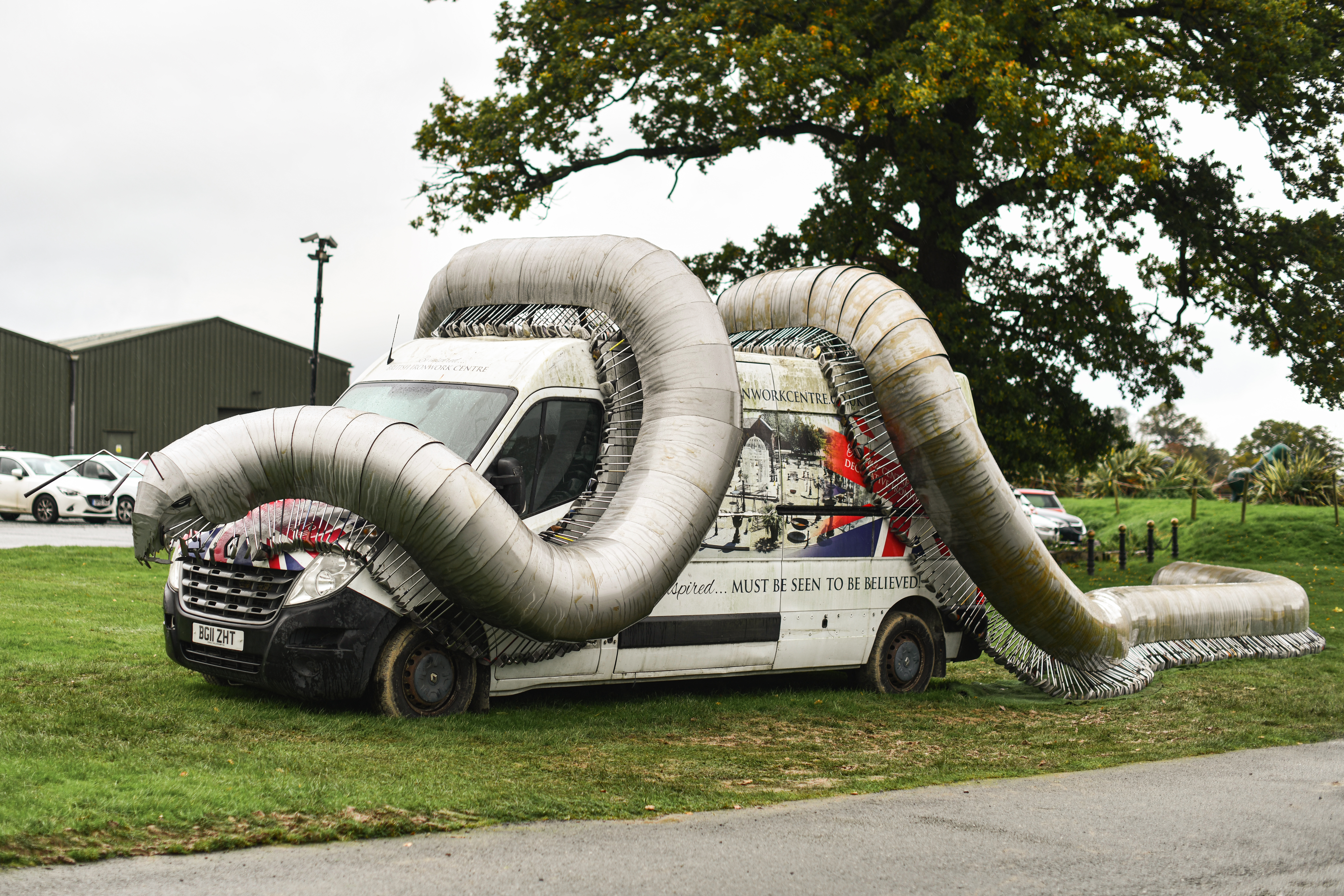
Millipedes are a group of arthropods characterised by their many pairs of legs! Essential to our ecosystem, millipedes are harmless insects that move slowly through organic matter, breaking down plant material and rejuvenating the soil. These detritivores play a huge part in recycling nutrients back into the soil. Millipedes can live for up to 10 years! About our Sculpture Made from over 2,000 unwanted gold clubs donated by our wonderful members and visitors, we created thi...
Read more... -
Hammerhead sharks are magnificent sea creatures that can grow up to 6 metres long. This keystone species predominantly lives in coastal areas, including that of Africa, South Asia, North Australia and Central America. Although hammerheads are considered aggressive hunters, they pose very little threat to humans. To date, there have only been 16 instances of a hammerhead biting a human, and of these, none resulted in fatality. They don’t eat mammals, so we’d never look like a...
Read more...
